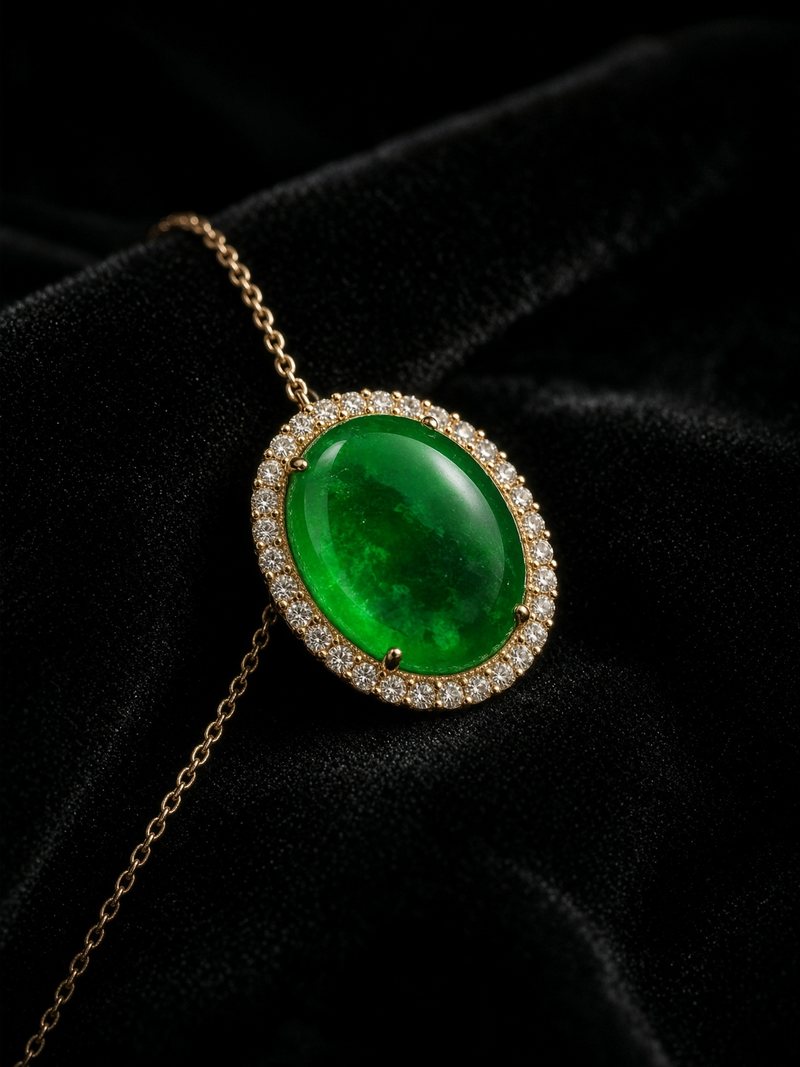
Beyond the 4Cs
The four Cs are a threshold, not the whole premium. Carat, colour, clarity and cut place a diamond in a comparable box. Inside that box the difference is often proportion, optical symmetry and fluorescence. For a round brilliant to return light through the table, the crown usually sits near 34 to 35 degrees, the pavilion near 40.6 to 41, the table near 54 to 58 percent.
Fluorescence is over-explained. Blue fluorescence under long-wave ultraviolet is not a clarity grade and not an automatic discount. The scale runs from None to Very Strong. Strong fluorescence may haze a high colour in daylight, or do almost nothing. Xinghe prints it in the specification. None and Faint are the default. Medium, if the fire deserves it, is shown before any decision.
The carat premium is not linear. The step from 0.90 to 1.00 is often dearer than the step below it, because markets crowd the integer. That is commerce, not optics. We would rather stop at the cut than thicken a pavilion to cross a number.
So the table lists crown, pavilion, table and fluorescence, not only D, VVS and a triple excellent. The figures remain indicative. The object and the report prevail. Excellent symmetry on a poor proportion is only politeness.
A Xinghe line has a further choice. If the depths of the small stones differ too much, the river lights in segments. Diameter tolerance is written on the worksheet, not only total weight. A handsome total with a broken rhythm is not a galaxy on the collarbone. It is a sequence of accidents. That column is absent from the four Cs, and it decides whether the light is continuous when worn.