Dielan
Dielan
Orchid, then a pink flame.
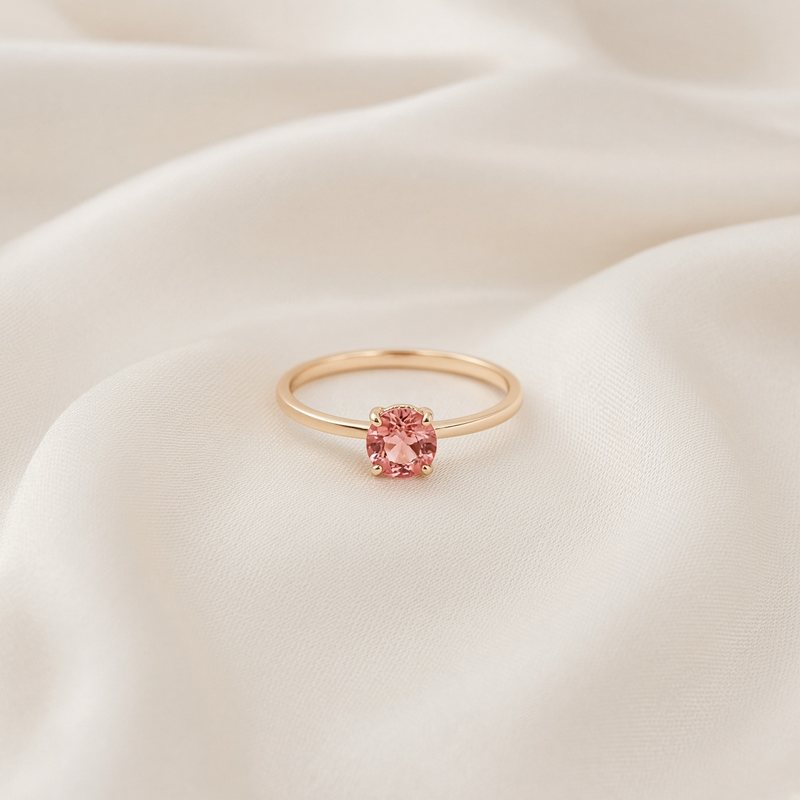
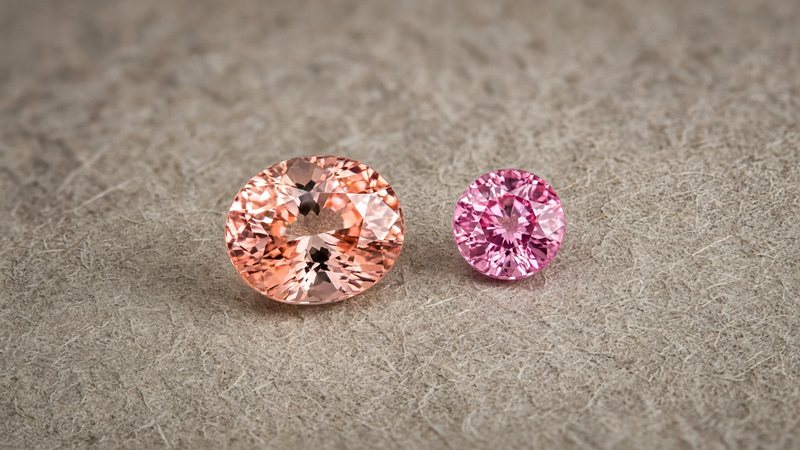
Dielan is two pinks that rarely agree. Padparadscha must sit between pink and orange; step too far and it is only a pink or an orange sapphire. A pink diamond takes its colour from a lattice, not from a dye. Gold has to step back or the pink becomes cosmetic.
A drawing decides the distance first. Too close, and the colours cancel. Too far, and they are merely two jewels in one frame.
Padparadscha sits between pink and orange. This page is not ruby and not jadeite. Gold stays back.
Light
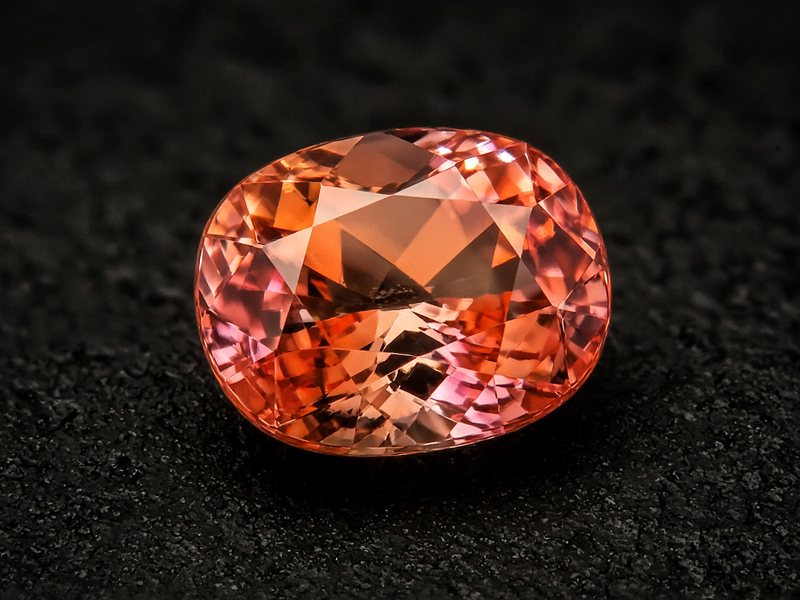
Dielan is a padparadscha, a sapphire paused between pink and orange. It is not a ruby and not a cosmetic pink. Too far either way and it is simply a pink sapphire or an orange one. The interval is narrow, so the rarity is real. Chromium and a colour centre share the colour. Daylight should still show orange. Warm light should not collapse it into coral.
Pink is easily photographed as skin. Skin pink is makeup. Padparadscha still needs a transparent fire, a petal against the light, not the surface of powder. If the picture is only sweet, it has failed. Sweet makes the gold look like an accessory. The gold steps back so the pink has a place of its own.
A pink diamond beside it is another material. Its colour is a centre in the lattice, not chromium in corundum. Distance decides whether the two pinks speak or cancel. Too close, and the diamond’s return breaks the orange. Too far, and they are two jewels that happened to share a frame. The distance is measured on paper before anyone asks which costs more.
Pink and orange must both survive daylight and warm light. Paler than ruby is not a defect. The ruby page’s pictures are not borrowed to lift it.
Making
Champagne gold may be used, in a small area. From an arm’s length the pink-orange table is seen first, the metal after. The prongs stay short, as with the sapphire, because warm gold dirties orange even faster. If the prong is too yellow, the pink becomes makeup. A whiter gold is better than a thicker champagne.
The two stones do not share one thick rail. Each has a seat, and the gap between them can breathe. The gap is the design, not an unfinished place. An invisible setting is not forced on a padparadscha. Grinding a zone down to fit a rail often thins the narrowest pink-orange. Once thinned, no certificate brings it back to the eye.
Polish is the opposite of the ruby. A ruby can bear a hard edge. Highlights on a padparadscha should be short and broken, so the centre of the table is not one white patch. White is exposure, not fire. The worksheet says: the table takes light, the neighbouring facets give it up.
A stud is kinder than a swinging drop. No petal of gold translates the name into a shape. In wax, the gap must not be flooded by the casting. Most of the time is spent there.
Keeping
The market places unheated padparadscha very high, and therefore fills the word with stones that were misnamed: pink sapphire, corundum whose colour was helped, an orange helped by the cut. The first act of keeping is to see whether a laboratory is willing to use the word, and what it writes about heat. If it will not, the family story does not use it first.
The two stones are described apart. A set of pink is sales language. Apart, the next keeper knows which is corundum, which is diamond, what was heated, and that the gap was intentional. If a diamond is later added into the gap, the piece is no longer Dielan. The change has to be written down.
A wedding is not used to force a gift of pink-orange on someone who wanted an expensive pink. The archive keeps the laboratory’s word, the heat line, the two weights and the width of the gap.
Drag to turn. The wireframe shows the structure of this material. It is not a scan and not a certificate.
| 主石 | Padparadscha sapphire |
|---|---|
| 顏色 | Pink and orange at once |
| 並置 | A pink diamond, if present, is described apart |
| 處理 | As the certificate words it |
| 金屬 | Champagne gold kept back |