The setting
Setting is a skeleton, not a decoration. Honeycomb openwork thins the metal until structure remains and light can return from below. It is slow, and it can deform. Done well, you forget where the gold is. Done loudly, the openwork is the noise. YIJING prefers less: open only where the stone needs to breathe.
Invisible setting holds stones in rails so metal nearly disappears. It depends on a precise girdle, not on the fantasy of glue. Corundum can bear the work. Softer materials should not be asked for that heroism. Micro-pavé shares tiny beads of metal. The beads must be round, even, and actually holding.
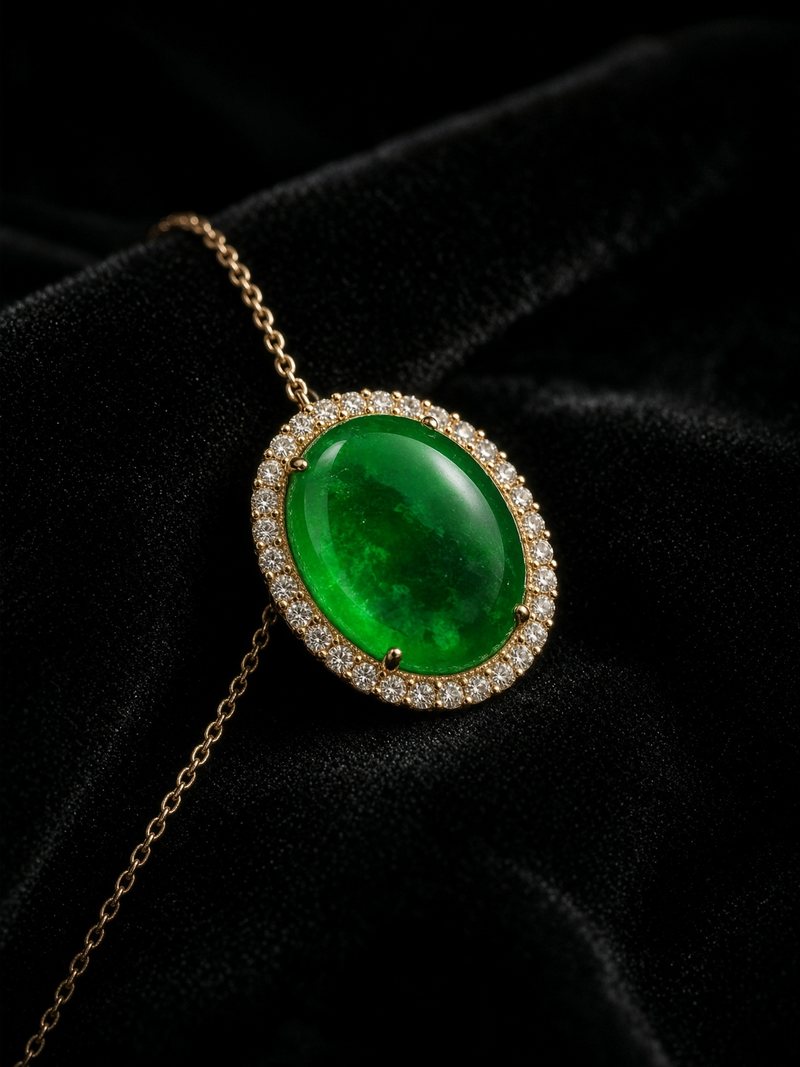
The number of prongs is design and risk. Four open a colour. Six steady a round diamond. We write the number down, because front and side must be the same object. If a photograph cannot honestly show the back, a drawing explains the structure. We do not pretend a front view is a back view.
Gold must be thick enough for fatigue and not so thick that it becomes a second jewel. That is mechanics and it is taste. Gold beyond need is not wealth. It is noise.
Hours are not printed as glory. An invisible-set ring can be slow, or it can perform slowness. We look at whether the back still has structure, whether a prong actually bears weight, whether openwork is thin enough to catch cloth. Fingers and a loupe should doubt this before a photograph does. The photograph is the last politeness, not the start of evidence.